How to Build an ADU in Massachusetts
Accessory Dwelling Units (ADUs) are one of the fastest-growing housing solutions in the United States. Whether you're a homeowner looking to generate rental income or a builder expanding your service offerings, ADUs represent a strong opportunity.
This page provides a clear and simplified overview based on the 2021 International Residential Code (IRC 2021), focusing on general building code requirements that apply nationwide.
Not sure if your property qualifies for an ADU?
Before investing in design, it’s critical to evaluate zoning, lot conditions, and structural feasibility.
👉 Request an ADU feasibility evaluation.
⚠️ Important: This article does not consider state or local amendments. Every state, county, and city has its own zoning regulations. Before starting any ADU project, always confirm local requirements with your Planning and Building Departments. Our goal here is to help you understand the minimum code standards from a structural and safety perspective.
What Is an ADU?
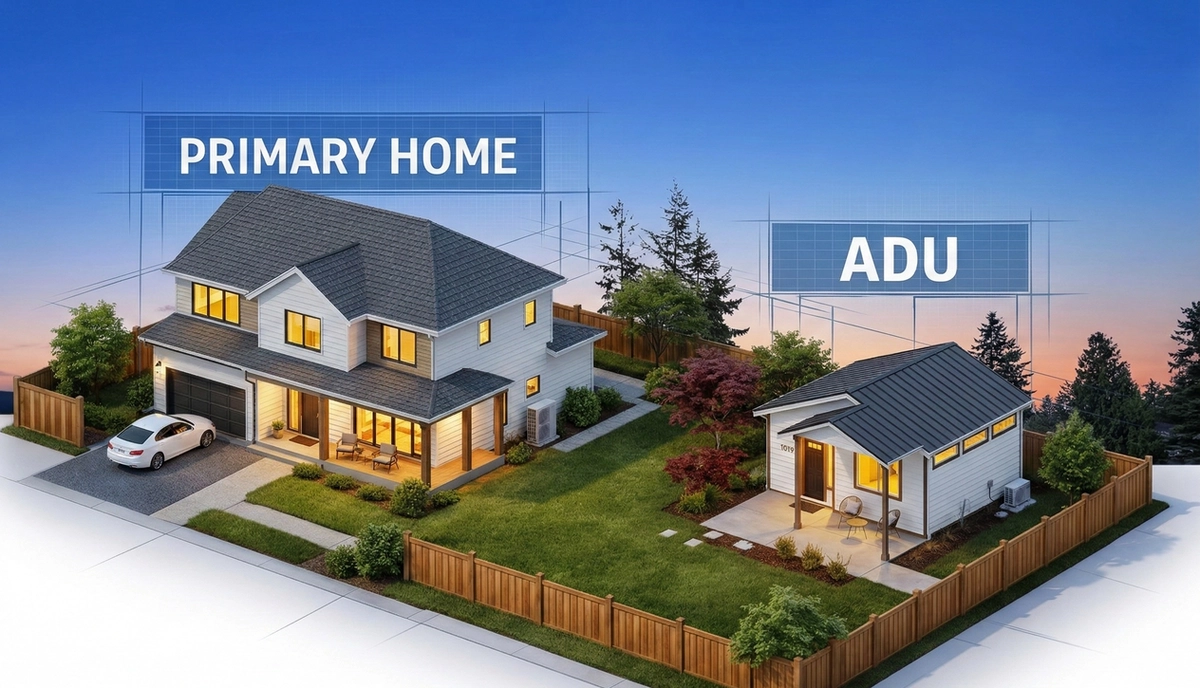
An Accessory Dwelling Unit (ADU) is a secondary residential unit located on the same lot as a primary dwelling.
It may be:
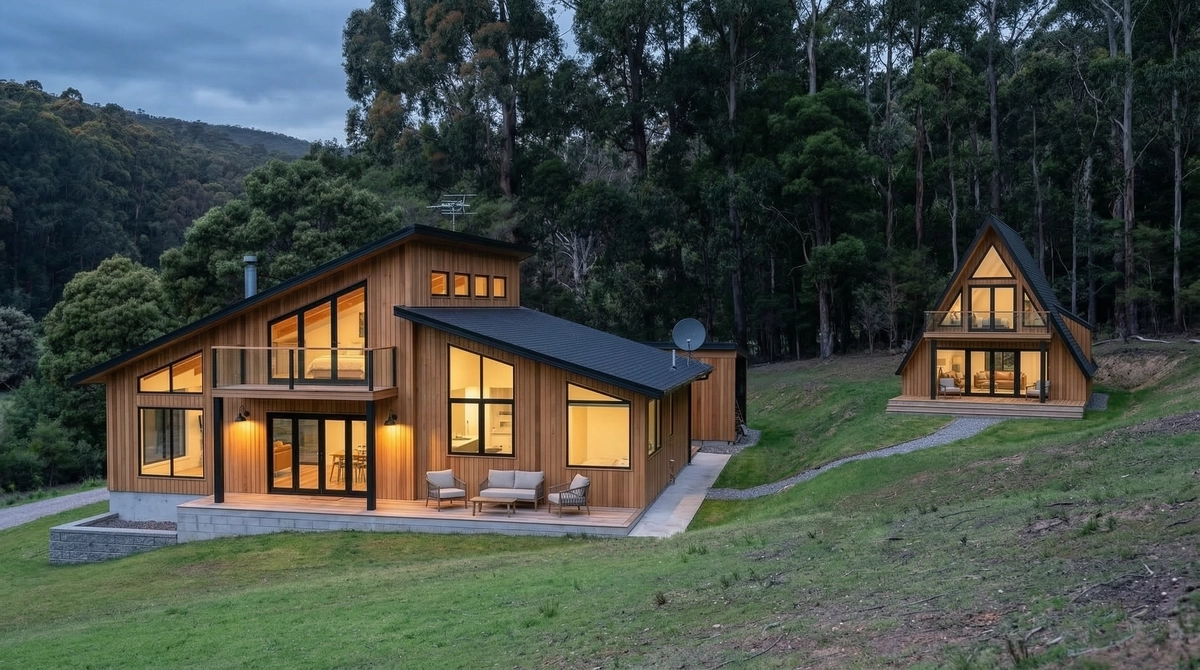
- Detached ADU – Separate structure in the backyard
- Attached ADU – Connected to the main house
- Garage Conversion – Converted existing garage
- Basement ADU – Unit within the basement
- Above-Garage ADU – Built over a garage
An ADU must function as a complete independent dwelling, typically including:
- Kitchen
- Bathroom
- Sleeping area
- Living space
Local zoning may also require a separate entrance.
What Does IRC 2021 Regulate?
The IRC 2021 does not regulate zoning, but it establishes minimum standards for:
- Structural safety
- Fire protection
- Egress and emergency escape
- Ceiling heights
- Light and ventilation
- Stairs and access
- Basic mechanical and plumbing provisions
Below are the most important technical considerations.
Minimum Ceiling Height
IRC 2021 generally requires:
- Minimum ceiling height: 7' - 0''
- Bathrooms, hallways, and certain areas may allow limited reductions
- Sloped ceilings must have at least 50% of the required floor area at 7' - 0''
This is especially critical for attic conversions, over-garage ADUs, and basement ADUs.
Natural Light and Ventilation
The IRC requires:
- Window area = minimum 8% of floor area
- Natural ventilation = minimum 4% of floor area
- Mechanical ventilation systems may be permitted as an alternative
Basement ADUs frequently require careful planning to meet these requirements.
Emergency Escape and Rescue Openings (Egress)
Every sleeping room must have an Emergency Escape and Rescue Opening (EERO).
General IRC requirements include:
- Minimum net clear opening: 5.7 sq ft
- Minimum opening height: 24''
- Minimum opening width: 20''
- Maximum sill height: 44'' above floor
This is one of the most common issues in garage and basement conversions.
Fire Separation Requirements
When an ADU shares walls with the main house, is built above a garage, or is attached to the primary dwelling, the IRC requires fire-resistance protection, which may include:
- 1/2'' or 5/8'' gypsum board depending on conditions
- Protected structural assemblies
- Fire separation between dwelling units
This is critical for permit approval.
Structural Requirements
Even though an ADU may be small, it must comply with IRC structural tables for:
- Floor joists
- Beams
- Rafters
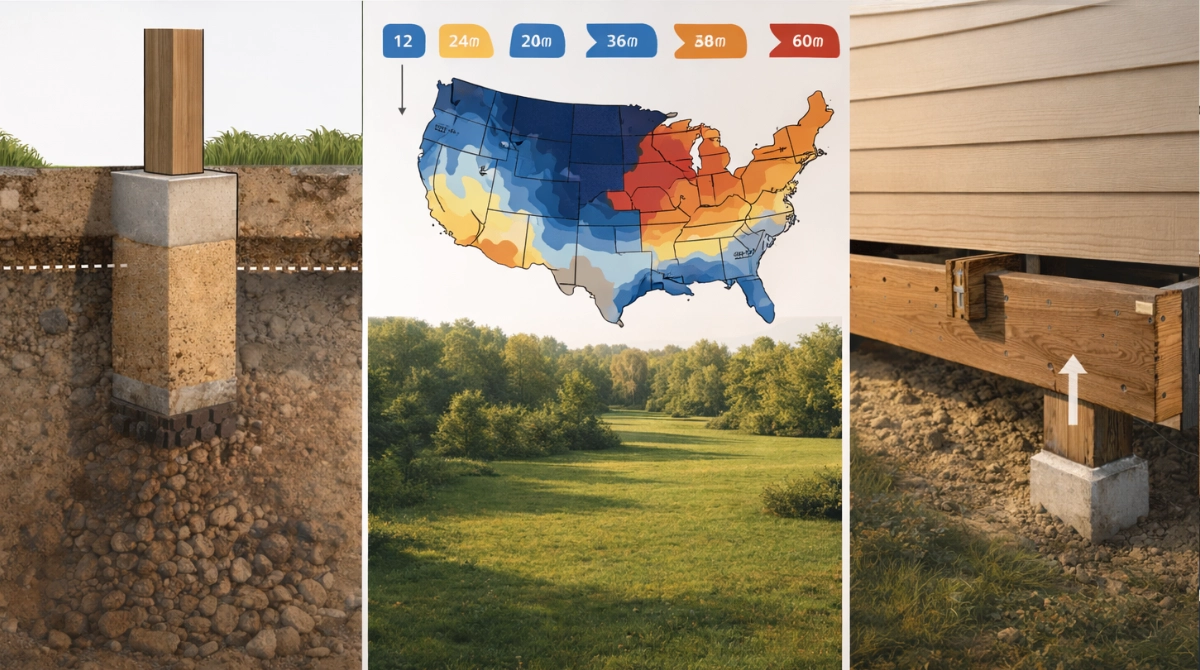
- Foundations
- Wind and snow loads (based on local design criteria)
Residential live loads are generally 40 psf minimum for living areas. Garage conversions often require structural reinforcement.
Stairs (If Applicable)
If the ADU includes a second level or is above a garage:
- Maximum riser height: 7 3/4''
- Minimum tread depth: 10''
- Minimum width: 36''
- Minimum headroom: 6' - 8''
Mechanical, Electrical & Plumbing
The IRC establishes baseline requirements, but many jurisdictions adopt additional codes. In general, ADUs must have:
- Properly sized electrical systems
- Heating capability
- Bathroom and kitchen ventilation
- Plumbing that meets residential standards
Not sure if your property qualifies for an ADU?
Before investing in design, it’s critical to evaluate zoning, lot conditions, and structural feasibility.
👉 Request an ADU feasibility evaluation.
What the IRC Does NOT Regulate
The IRC 2021 does not determine:
- Whether ADUs are permitted on your lot
- Maximum square footage
- Setbacks
- Lot coverage limits
- Parking requirements
- Owner-occupancy rules
These are controlled by local zoning ordinances. Always verify:
- Zoning district regulations
- Planning Department requirements
- Building Department submission guidelines
Common ADU Mistakes
- Skipping zoning verification
- Improper egress sizing
- Ignoring fire separation
- Underestimating structural upgrades
- Failing to update the Plot Plan
Is an ADU a Good Investment?
For homeowners:
- Rental income
- Increased property value
- Multi-generational living
For builders:
- Growing demand
- High-margin small projects
- Repeat business opportunities
However, success depends on proper planning, code compliance, and local approval.
Final Thoughts
An ADU may be “accessory,” but under the IRC it must meet the same minimum safety and structural standards as any primary dwelling.
Before starting:
- Confirm zoning
- Review setbacks
- Evaluate structural capacity
- Design according to IRC 2021
Ready to Build Your ADU?
Contact our team today and let’s start your ADU project the right way.
Get our complete ADU planning document based on IRC 2021 and real-world experience.